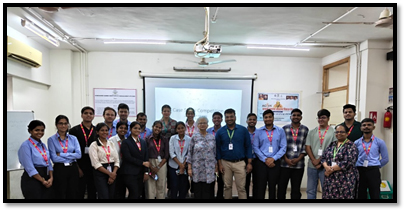
The Research Cell of Maratha Mandir’s Babasaheb Gawde Institute of Management Studies organized a Case Study Competition on Thursday, 13th August 2026 with the objective of encouraging students to apply analytical thinking, research skills, and problem-solving abilities to real-world business and social issues. The competition provided a platform for students to develop and present original case studies while demonstrating their ability to identify problems, analyse situations, and recommend practical solutions.
The event was judged by Dr. Vidya Hattangadi, a distinguished academician and expert in case study development and analysis, who evaluated the submissions based on originality, relevance, analytical depth, presentation, and feasibility of recommendations.
Participation Details
A total of 8 case studies were received from various clubs and specializations:
| Category | Number of Cases
|
| BMS Club | 4 |
| Finance Club | 2 |
| Marketing Club | 2 |
| Total | 8 |
The competition witnessed enthusiastic participation from students who explored contemporary business, sustainability, social impact, and entrepreneurial themes through their case studies.
Evaluation Process
Dr. Vidya Hattangadi carefully reviewed all the submissions and assessed them on the following parameters:
- Relevance and significance of the problem identified
- Clarity of objectives and background information
- Quality of research and data analysis
- Application of analytical frameworks
- Creativity and originality
- Feasibility of recommendations
- Overall presentation and communication
Participants were encouraged to present evidence-based arguments and practical solutions to the challenges discussed in their case studies.
Results
After detailed evaluation, the following case studies were declared winners:
First Prize – A Case Study on India’s Dedicated Freight Corridor and the Challenge of Winning Back High-Value Cargo from Road Transport
The case demonstrated excellent research, strategic thinking, and relevance to contemporary transportation challenges.
Second Prize – (Joint Winners) Market Structure and Competitive Analysis of the B2B Tissue Paper Industry: A Case Study of Mumbai Tissue Hub Mangal Masala
AND
Driving sustainable growth in the spice industry: The case of Mangal Masala Mazagaon Mumbai
Both case studies showcased excellent research, industry understanding, and well-developed recommendations, earning equal recognition from the judge.
Third Prize – Amul: from village to national pride
The case effectively analysed the brand’s business model, marketing strategies, and cooperative structure, offering valuable managerial insights.
Judge’s Remarks
Dr. Vidya Hattangadi appreciated the efforts of all participants and commended the quality of submissions received. She emphasized the importance of case study writing as a tool for experiential learning, research, and managerial decision-making. She encouraged students to continue developing analytical and research skills through participation in such academic activities.
Learning Outcomes
The competition enabled students to:
- Develop critical thinking and analytical skills.
- Apply theoretical concepts to practical business situations.
- Enhance research and case-writing capabilities.
- Improve presentation and communication skills.
- Understand decision-making and problem-solving approaches in diverse organizational contexts.
Conclusion
The Case Study Competition organized by the Research Cell was a successful academic initiative that fostered research-oriented learning among students. The enthusiastic participation and quality of case submissions reflected the students’ growing interest in applied research and case study methodology. The event concluded with the announcement of winners and a vote of thanks to Dr. Vidya Hattangadi for her valuable contribution as judge and mentor. Total 30 students and 2 staff attended the session
Feedback:
Participants appreciated the opportunity to apply research and analytical skills to real-world challenges through case study writing. They found Dr. Vidya Hattangadi’s feedback insightful and valuable, and expressed interest in more such competitions and workshops in the future.