Introduction
The modern job market is evolving rapidly due to technology, globalization, artificial intelligence, and changing industry demands. Academic knowledge alone is no longer enough to secure long-term career success. Employers today are looking for students who possess practical skills, adaptability, leadership qualities, and problem-solving abilities.
College play an important role in helping students become career-ready professionals. Along with classroom education, students must focus on developing technical, interpersonal, and digital skills that align with the future workplace.
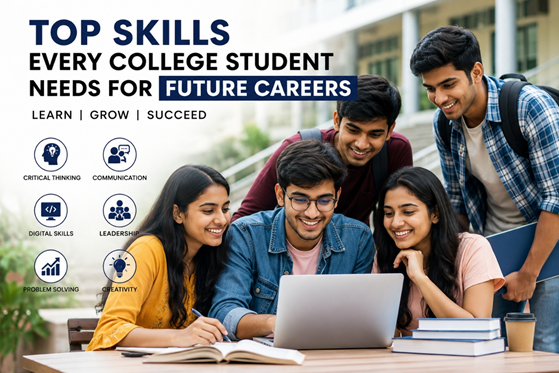
This article explores the top skills every college student should develop to build a successful and future-ready career in 2026 and beyond.
Why Skills Matter More Than Ever
The Shift Towards Skill-Based Hiring
Companies across industries are increasingly focusing on skills rather than only academic degrees. Employers want candidates who can contribute immediately, adapt to workplace challenges, and work efficiently in dynamic environments.
Many organizations now assess:
- Communication abilities
- Critical thinking
- Leadership potential
- Technical expertise
- Digital literacy
- Team collaboration
This shift has made skill development an essential part of higher education.
Importance of Employability Skills
Employability skills help students transition smoothly from college to professional careers. These skills improve confidence, workplace performance, and long-term growth opportunities.
Students who combine academic qualifications with practical skills often gain better placement opportunities, higher salaries, and faster career progression.
Communication Skills
Importance of Effective Communication
Communication is one of the most important professional skills in every industry. Students must learn how to express ideas clearly, professionally, and confidently.
Strong communication skills help in:
- Interviews
- Group discussions
- Presentations
- Teamwork
- Client interactions
- Leadership roles
Verbal Communication
Students should practice:
- Public speaking
- Professional conversations
- Presentation delivery
- Active listening
Participating in seminars, debates, and presentations can significantly improve speaking confidence.
Written Communication
Professional writing is equally important. Students should learn:
- Email etiquette
- Report writing
- Business communication
- Proposal writing
- Research documentation
Clear writing creates a strong professional impression.
Digital and Technology Skills
Importance of Digital Literacy
Technology is transforming every industry, including finance, healthcare, marketing, education, and management. Students must develop digital literacy to remain competitive.
Essential Digital Skills
Some important digital skills include:
- Microsoft Office tools
- Google Workspace
- Data analysis basics
- Online collaboration tools
- Cybersecurity awareness
- Cloud-based platforms
Students with strong digital knowledge are more adaptable to modern workplaces.
Understanding Artificial Intelligence
Artificial intelligence is becoming part of everyday business operations. Students should understand:
- AI tools
- Automation concepts
- Data-driven decision-making
- Ethical use of AI
Basic familiarity with AI can provide a major advantage in future careers.
Digital Marketing Knowledge
Digital marketing skills are valuable across industries. Students should understand:
- Social media marketing
- Search engine optimization (SEO)
- Content creation
- Analytics
- Branding
These skills are useful for jobs, freelancing, entrepreneurship, and personal branding.
Critical Thinking and Problem-Solving
Why Critical Thinking Is Important
Employers prefer candidates who can analyze situations logically and solve problems effectively.
Critical thinking helps students:
- Make informed decisions
- Evaluate risks
- Handle workplace challenges
- Improve innovation
Developing Analytical Skills
Students can improve analytical abilities through:
- Case studies
- Research projects
- Business simulations
- Data interpretation exercises
Real-World Problem Solving
Practical exposure through internships and live projects helps stude
Leadership and Teamwork Skills
Leadership is not limited to managerial positions. Employers value students who can take initiative, motivate teams, and handle responsibilities.
Leadership skills include:
- Decision-making
- Accountability
- Strategic thinking
- Conflict resolution
- Time management
How Students Can Build Leadership Skills
Students can develop leadership qualities by participating in:
- Student committees
- Cultural events
- Research conferences
- Business competitions
- Community initiatives
These activities improve confidence and responsibility.
Teamwork and Collaboration
Modern workplaces require collaboration across departments and teams. Students must learn how to work effectively with others.
Benefits of Teamwork
Strong teamwork skills help students:
- Adapt to workplace environments
- Improve communication
- Build professional relationships
- Increase productivity
Group assignments and project-based learning encourage collaborative thinking.
Adaptability and Flexibility
Importance of Adaptability in 2026
Industries are changing rapidly due to technological advancements and market shifts. Students must be flexible and open to continuous learning.
Adaptable professionals can:
- Learn new technologies quickly
- Handle workplace changes
- Manage uncertainty effectively
- Stay relevant in competitive industries
Lifelong Learning Mindset
Continuous learning is becoming essential for career growth. Students should regularly upgrade their knowledge through:
- Certifications
- Online courses
- Workshops
- Industry seminars
A learning mindset increases employability and career resilience.
Financial and Entrepreneurial Skills
Financial Awareness for Students
Basic financial literacy is important for both personal and professional success.
Students should understand:
- Budgeting
- Saving and investing
- Tax basics
- Financial planning
Financial knowledge helps students make informed career and life decisions.
Entrepreneurship is no longer limited to starting businesses. Employers value innovative thinking and initiative.
Important Entrepreneurial Skills
Students should develop:
- Creativity
- Risk assessment
- Innovation
- Opportunity identification
- Strategic planning
Entrepreneurial thinking improves problem-solving and leadership capabilities.
Emotional Intelligence and Professional Ethics
Importance of Emotional Intelligence
Emotional intelligence helps students manage emotions, understand others, and build healthy professional relationships.
Key emotional intelligence skills include:
- Empathy
- Self-awareness
- Emotional control
- Relationship management
Professionals with high emotional intelligence often perform better in leadership and collaborative roles.
Professional Ethics and Integrity
Ethics and professionalism are critical in every career field.
Students should practice:
- Honesty
- Accountability
- Discipline
- Respectful behavior
- Professional conduct
Strong ethical values build trust and long-term professional credibility.
Networking and Personal Branding
Importance of Professional Networking
Networking helps students access opportunities, mentorship, internships, and career guidance.
Ways to Build a Professional Network
Students can network through:
- College events
- Industry conferences
- Alumni interactions
- Workshops and seminars
Strong professional connections can significantly improve career growth.
Building a Personal Brand
Personal branding helps students showcase their skills and achievements professionally.
Students should:
- Maintain a professional online presence
- Build a strong LinkedIn profile
- Share achievements and certifications
- Participate in professional discussions
A strong personal brand increases visibility and employability.
Time Management and Productivity
Effective time management improves academic performance and reduces stress.
Students who manage time efficiently can balance:
- Studies
- Skill development
- Internships
- Extracurricular activities
Productivity Habits for Students
Useful productivity practices include:
- Goal setting
- Prioritization
- Planning schedules
- Avoiding procrastination
These habits improve overall performance and discipline.
Conclusion
The future workplace requires more than academic qualifications. Students must develop a combination of communication abilities, digital literacy, leadership qualities, analytical thinking, emotional intelligence, and adaptability to succeed in modern careers.
Colleges that encourage practical learning, innovation, research, and skill development help students become career-ready professionals. At the same time, students must take initiative to continuously improve themselves through learning, networking, and real-world experiences.
The students who invest in skill development today will be better prepared to succeed in the competitive and technology-driven careers of tomorrow.
Frequently Asked Questions
What are the most important skills for college students in 2026?
Communication, digital literacy, critical thinking, leadership, adaptability, and emotional intelligence are among the most important skills for future careers.
Why are employability skills important?
Employability skills help students perform effectively in workplaces, improve career opportunities, and adapt to changing industry demands.
How can students improve communication skills?
Students can improve communication through presentations, public speaking, debates, group discussions, and professional writing practice.
Why is digital literacy important for students?
Digital literacy helps students use technology effectively, improve productivity, and remain competitive in modern workplaces.
How do colleges help students become career-ready?
Colleges support career readiness through internships, live projects, industry interaction, skill development programs, and practical learning initiatives.
Written By
Dr Pranav Indulkar